
Criminal Cases in Coweta County Courts
Coweta County divides criminal case records by court authority. Superior Court has exclusive felony trial jurisdiction, and its Court Services division maintains indictments, docket entries, judgments, and related filings. State Court keeps misdemeanor and traffic cases. Magistrate Court issues warrants and handles first appearances and preliminary matters, but it does not replace the trial-court file. Newnan, Grantville, and Senoia municipal courts keep ordinance and qualifying traffic or fine-only matters within their own authority.
The clerk is the custodian of the court file. That distinction matters because the sheriff holds arrest and booking material, not the later indictment, plea, or judgment. A Coweta County criminal case search may therefore require more than one clerk when an arrest began with a city officer or when a charge moved from an early warrant stage into a trial court. The case number, filing year, and court name are the best anchors for keeping similar names apart.
Coweta's Official Docket Choice
The Coweta Superior Court Services page links to the clerk's real-time Case Management search. The clerk expressly warns that PeachCourt and Odyssey eFileGA are not the official docket. Those services support filing or document access, but a reader should confirm status and events in the clerk's system.
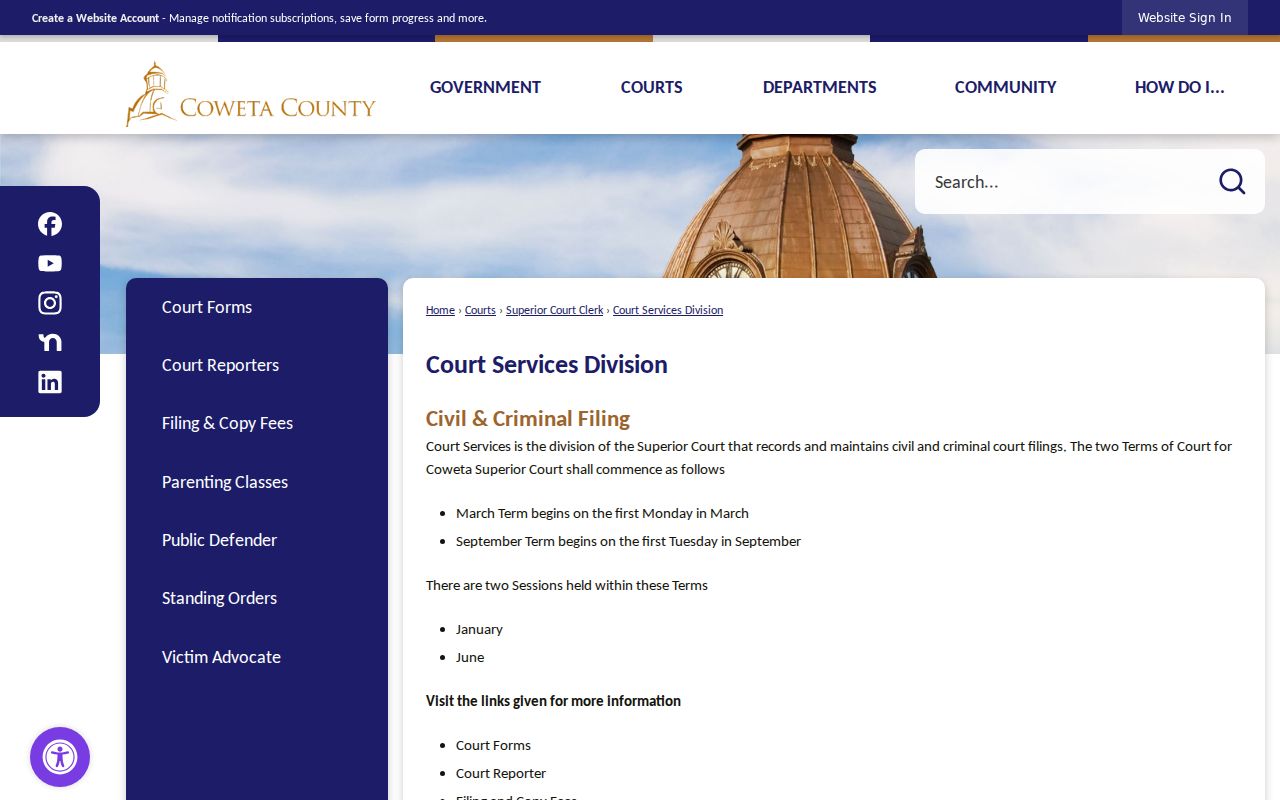
The distinction is practical. A vendor copy may not reflect the newest Coweta County court event, and some filed documents may not be scanned for remote access. When a docket entry exists without an image, note its date and description, then ask Court Services for a plain or certified copy. Older files may require a counter, phone, mail, or focused records inquiry.
How to Search Coweta County Case Records
Start with the court level, then use the narrowest identifier available. The Coweta Superior search accepts party details, case numbers, dates, case type, status, and court filters. State Court provides a separate route for misdemeanor and traffic dockets. A city municipal court is the correct first stop when an ordinance or qualifying traffic case never entered a county trial court.
- Choose Superior Court for a felony, State Court for a misdemeanor or county traffic matter, or the issuing municipal court for a city case.
- Use the case number when known. For a name search, begin with surname and given name, then test reasonable spelling variants.
- Narrow broad results by filing year, criminal case type, status, or court. Do not treat a shared name as an identity match.
- Open the docket and read each count's status, latest event, and disposition. A case can contain both dismissed and convicted counts.
- Contact the correct clerk for an absent scan, archived file, or certified document. Supply the court, case number, party name, and filing date.
| Field Label | Type | Required | Notes |
|---|---|---|---|
| Name or Party | Text | No | Start with surname; try spelling variants. |
| Case Number | Text | No | Superior examples use year, SU, R, and a sequence. |
| File Date From/To | Date | No | Narrows common-name results. |
| Case Type or Status | Select | No | Choose criminal and open, pending, or disposed where offered. |
| Court | Select | No | Confirms the participating court context. |
Coweta Criminal Clerk Desks
Both principal county clerks work at the Coweta County Justice Center, but their files remain distinct. Superior Court Services handles felony filings and can answer questions about certified copies. The State Court Clerk manages misdemeanor and traffic records. Its public hours are Monday through Friday, 8 a.m. to 5 p.m.; the fine-payment window closes at 4:30 p.m.
Superior Court Services
72 Greenville Street
Newnan, GA 30263
770-254-2695
State Court Clerk
72 Greenville Street
P.O. Box 884, Newnan, GA 30264
770-254-2699
Fax: 770-252-6422
The State Court Clerk page provides its docket and records route.
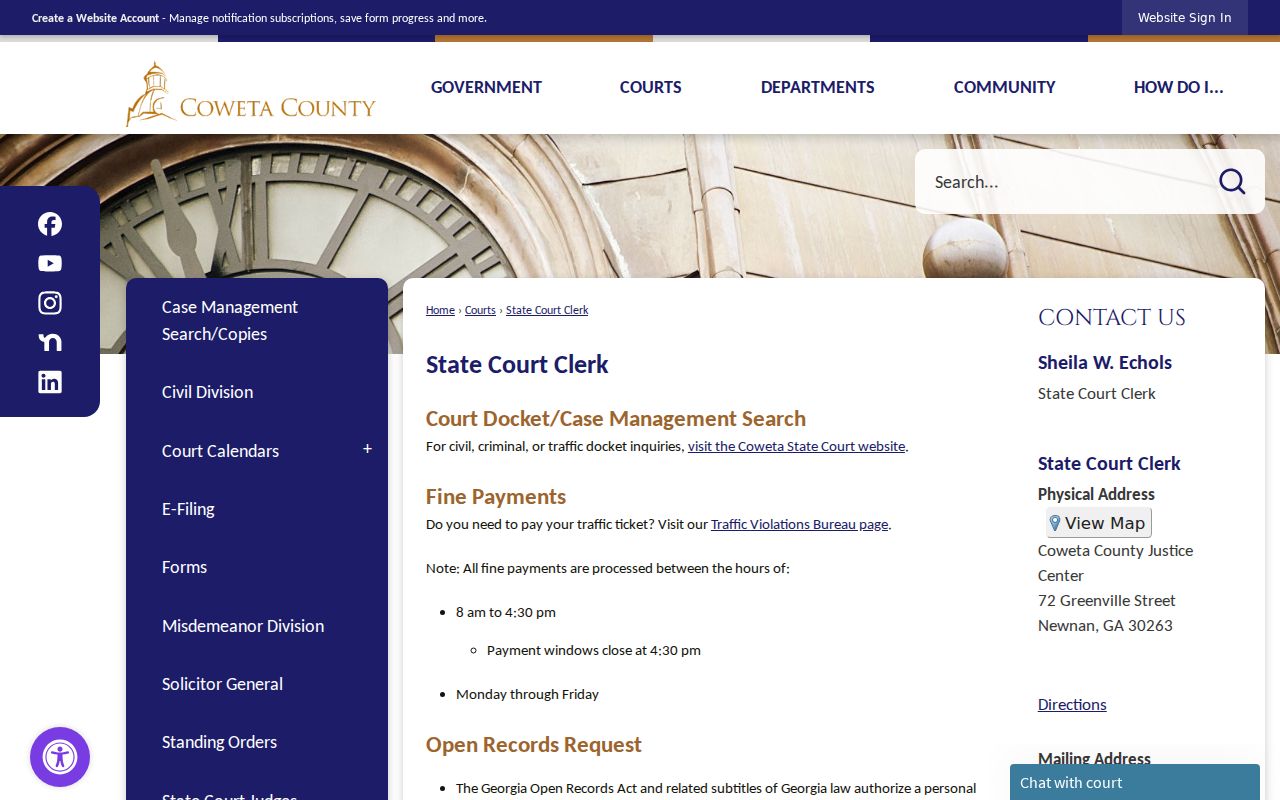
This clerk page is the right county channel for State Court records rather than felony Court Services. Court calendars may identify hearing rooms by floor and letter, so verify the room from the calendar instead of assuming the records counter is the courtroom.
What a Coweta Case File Shows
A Coweta County criminal file connects the formal accusation or indictment to later court action. The docket is an index of events, not always the full document set. For the result, read the judgment and each charge disposition. A calendar listing proves only that a matter was scheduled. It does not prove guilt, and the first arrest label may differ from the count the prosecutor filed.
| Case Number and Court | Identifies the file, filing year, and court with authority over it. |
|---|---|
| Charging Document | An accusation or indictment states the formal counts. |
| Docket Entries | Dates and descriptions track filings, motions, notices, and hearings. |
| Hearing Dates | Calendars can list the judge, courtroom, attorneys, and scheduled event. |
| Disposition and Judgment | Shows whether each count ended in conviction, dismissal, acquittal, or another result. |
| Sentence and Conditions | Records confinement, probation, restitution, costs, and other court terms when public. |
Reading Coweta Criminal Outcomes
Georgia terms can make a Coweta County docket look less final than it is. A disposition is the result of one charge. Nolle prosequi means the prosecutor formally chose not to continue that charge. A no bill means the grand jury did not indict on the charge presented. Dead docket places a case in an inactive status rather than finally deciding it. A dismissal ends the charge without a conviction.
- Accusation
- A prosecutor's formal charging instrument used for many Georgia cases without an indictment.
- Indictment
- A grand jury's true bill that formally charges an offense.
- Arraignment
- The hearing where charges are read and a plea is entered.
- First Offender
- A Georgia deferred-adjudication path whose successful discharge can seal a qualifying matter.
The GBI criminal-history explanation helps show why a court outcome must be sent back to GCIC.
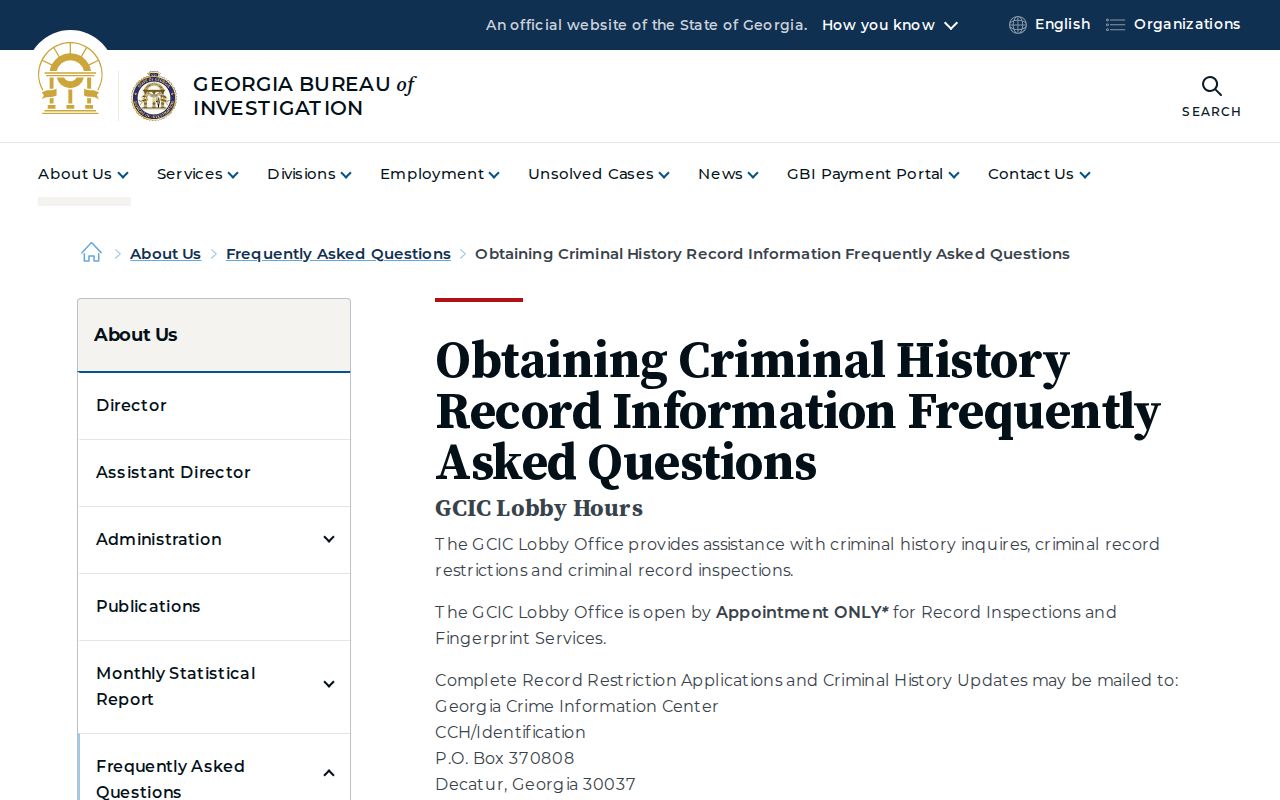
If the Coweta court file is current but a person's own GCIC history lacks the outcome, ask the appropriate court to transmit the missing or corrected disposition. The local judgment remains the best source for how that court case ended.
Stages of a Coweta County Criminal Case
A local matter may begin with an arrest or citation. When custody is involved, booking and a first appearance can precede prosecutor review. The prosecutor may file an accusation, seek an indictment, alter the initial charge, or decline it. After arraignment, motions and pretrial hearings shape the case before a plea or trial. Judgment, sentence, and a possible appeal follow. No fixed time applies to every file, so the latest dated docket event is more useful than a broad estimate.
Case flow: Charges Filed › Arraignment › Pretrial › Plea or Trial › Disposition › Sentencing
A reader following an arrest into court should match the person, arrest date, agency, and filed case number. The Coweta County arrest history explains the earlier agency and booking records, while the clerk file shows what was prosecuted.
Coweta Public Defender Appointments
A public-defender appointment is part of the court process, not a separate criminal-history search. Coweta State Court publishes its appointment procedure and contacts. An application, appointment decision, attorney appearance, or hearing notice may create entries in the file, while protected financial or personal details may not be public.
The Coweta State Court Public Defender page is the official source for the appointment process.
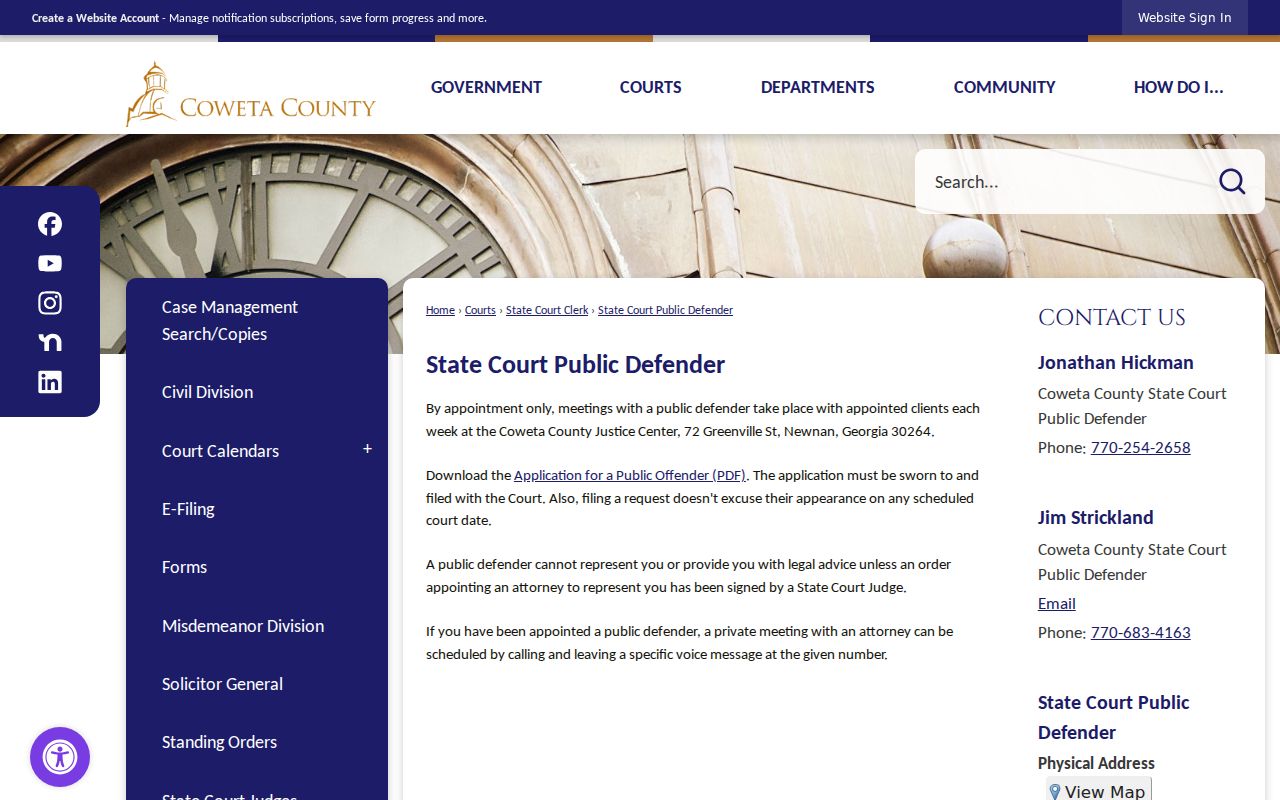
This source helps distinguish an attorney-assignment question from a request for the docket itself. For filed pleadings, hearing events, or the outcome, return to the State Court Clerk and use the case number.
The official State Court judges page also identifies the Justice Center court setting.
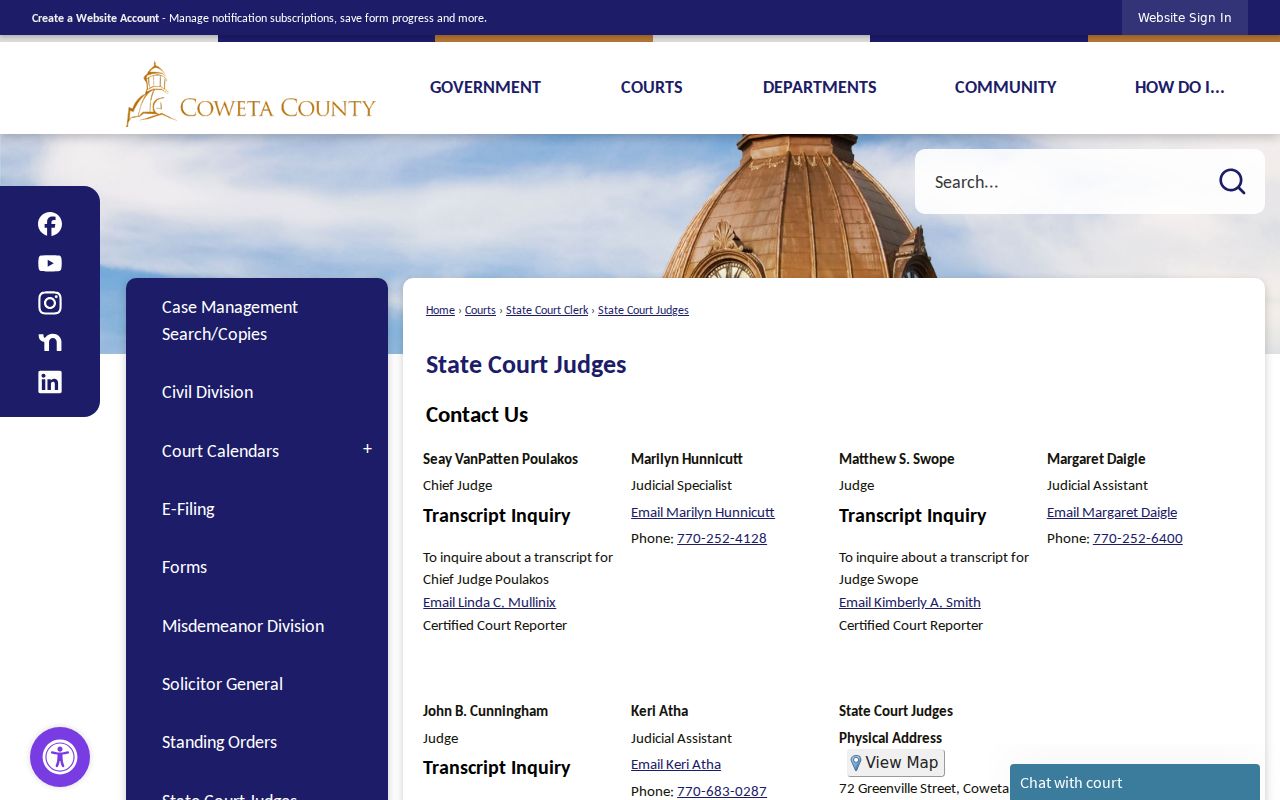
Judge and courtroom information can help interpret a calendar entry, but it does not replace the clerk's record of the filed charge or final judgment.
Which Coweta Court Has It
A criminal event can produce records at several levels, but the filed charge determines the trial-court custodian. Superior Court is the felony court. State Court maintains misdemeanors and traffic cases within its authority. Municipal courts retain many ordinance and traffic matters, while Magistrate Court handles warrants, first appearances, and preliminary functions.
| Court | Main criminal role | Record route |
|---|---|---|
| Coweta Superior Court | Felony cases and indictments | Court Services at 72 Greenville Street |
| Coweta State Court | Misdemeanors and traffic | State Court Clerk at the Justice Center |
| Magistrate Court | Warrants and first appearances | Justice Center division |
| Municipal courts | City ordinance and qualifying traffic cases | Newnan, Grantville, or Senoia clerk |
A municipal citation may never appear in the Superior Court search. Conversely, an arrest that begins with a city officer may later become a Superior or State Court case. Search the issuing city first when the citation remains local, and follow a filed accusation or indictment to the named county clerk.
Coweta Case Record Access and Restrictions
The Georgia Open Records Act favors access to government records, but court records also carry limits for juvenile matters, protected victim data, sealed filings, and sensitive identifiers. An online docket can show less than the clerk's releasable paper file. Absence from search may reflect a spelling issue, court choice, older format, missing scan, restriction, or sealing. It is not enough to assume that no case exists.
Ask the clerk to check archived or paper holdings and to identify the legal basis for any withheld material. A request should seek an existing record, not ask the office to create a report. Under the county process, the three-business-day rule governs the response, not guaranteed final production. An office may produce records, cite an exemption, estimate cost, say it has none, or give a timetable.
The GBI restriction page explains that restricting a history and sealing a court file are related but distinct steps.
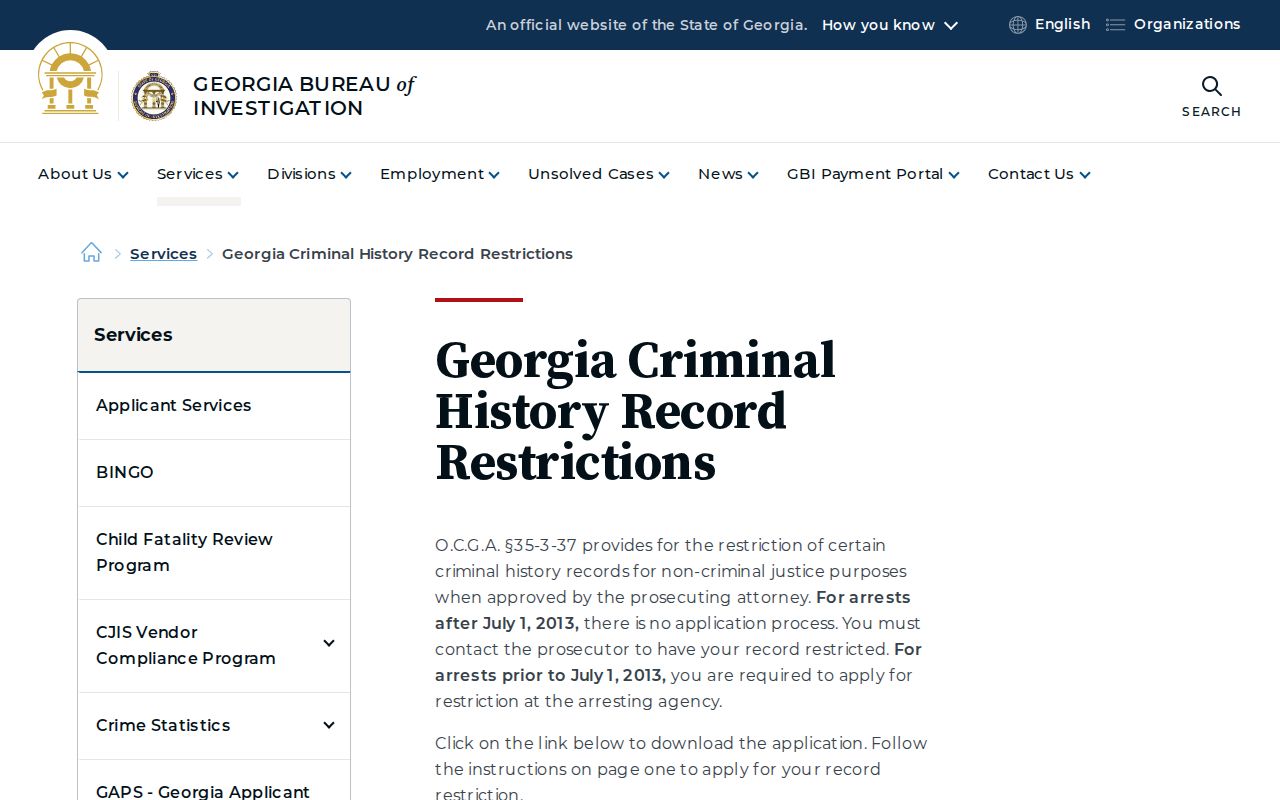
After relief, verify both the GCIC product and Coweta County case search. A separate court-sealing order may be required for the public docket even when eligible history is restricted.